
By Julia , February 25, 2026 · 5 min read
AI-Driven Prototyping & Ideation: Turning Concepts Into Business Experiments
Most AI software development projects don’t fail because of technology. They fail because teams build something slightly different than what the business actually needs. AI-driven prototyping reduces that gap.
AI has made it much easier to validate ideas that remained unfulfilled. They can now be validated quickly by building prototypes with AI and testing them early on. What are the possible advantages of this approach?
Faster validation with clients
It allows us to test and validate our assumptions early. It is basically impossible to avoid that some requirements will prove to be misunderstood or will come up as obsolete or ill‑articulated. Building a working prototype with AI using a rapid prototyping approach to the client as soon as possible (during the requirement‑gathering phase) can help avoid this pitfall. Sure, we can always use a design prototype for this purpose, but prototyping with AI helps to dig into something more “real.” You can use it to see how things will look, but you usually won’t be able to start introducing data and see how it works in the real world.
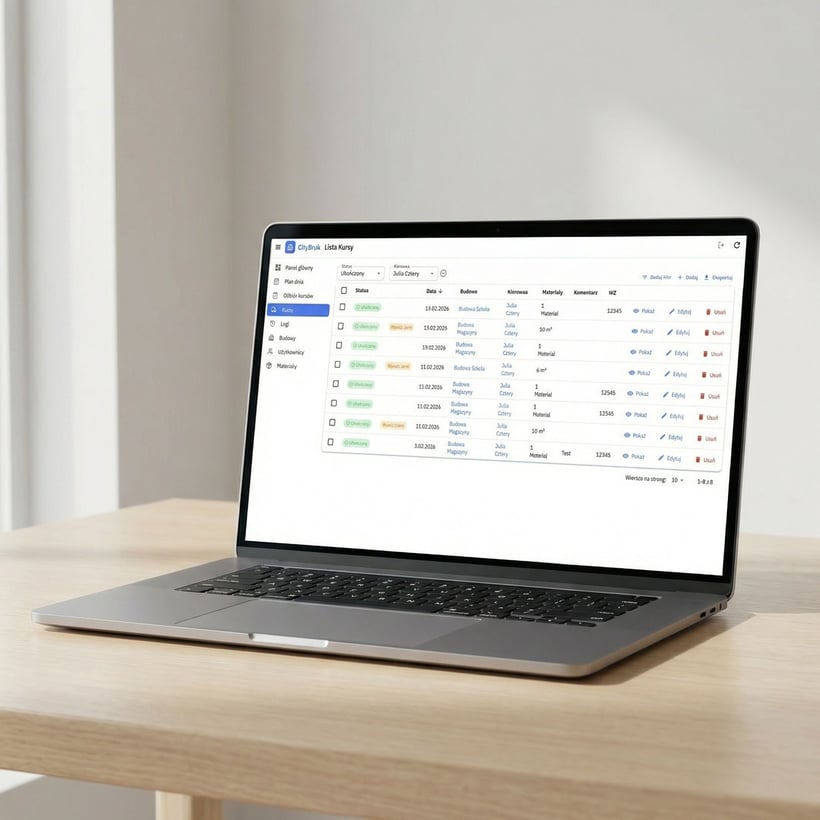
A short demo showing how the AI-powered Proof of Concept we built for our client CityBruk works in practice - turning real business needs into a functional solution within days, not months.
A short demo showing how the AI-powered Proof of Concept we built for our client CityBruk works in practice - turning real business needs into a functional solution within days, not months.
Reducing the risk of building the wrong product
AI-driven prototyping supports faster product validation and reduces strategic risk. It happens: the client imagines something different from what is eventually built. It isn’t necessarily the fault of the developers, the client, or the project manager. It’s just that sometimes it’s hard to translate someone’s needs into a real product. The faster we notice that gap, the smoother the process will be. If we notice early on that the project is not heading in the right direction, we can apply changes quickly and without losing money. That’s why requirements gathering is so important, and that’s why prototyping may help tremendously with it and with translating business requirements into web development.
Cost savings in early development
As a result, it may significantly reduce the costs of the early development phase, especially requirements gathering and designing. In some cases, design might no longer be needed. For customer‑facing products, it will still be very important, but if we are working on a back‑office app? Preparing designs could help with defining requirements and showing the client how things will look in the app before the implementation phase. But with quick AI prototyping, it doesn’t make that much sense anymore.
When does it make the most sense?
- Internal tools and back-office systems
- Workflow-heavy applications
- Data-driven dashboards
- Process automation experiments
- Early-stage product validation and MVP development
Real‑life example
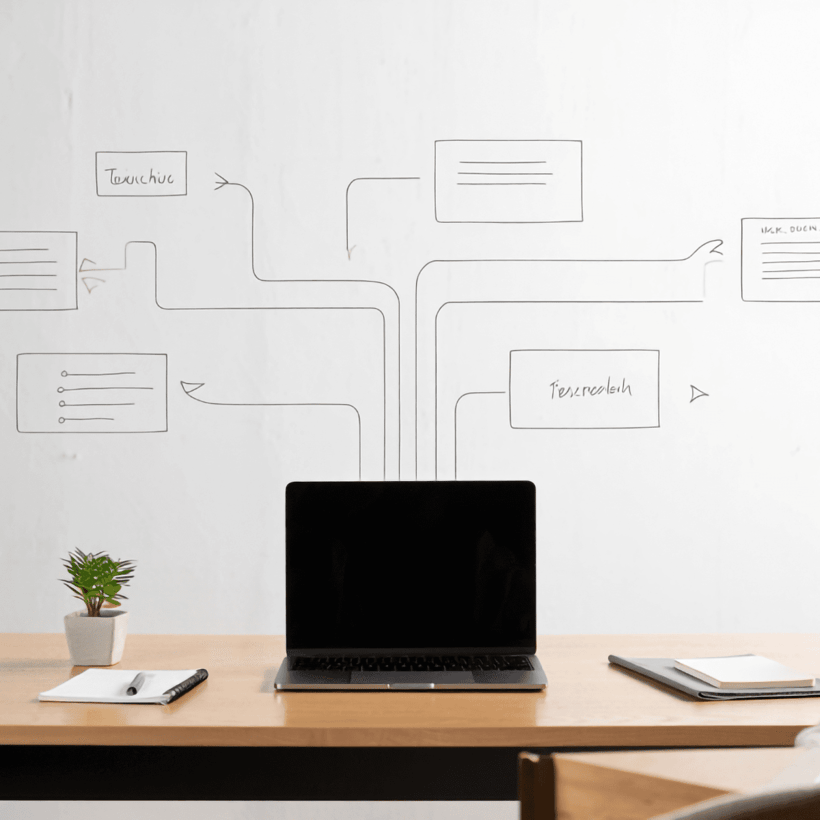
We did this recently with a project for a construction company. We gathered initial requirements, built a quick prototype, and then, very early on, we showed it to the client. It was a new industry for us; we didn’t know all the things that could happen in the process, and we didn’t know the industry-specific language. But the prototype helped with the communication. We could discuss issues and features not by theorizing and dreaming, but by showing things in action. Then, after receiving the client’s feedback, we started building on top of that prototype.
Risks
The gap between a great prototype and a production‑ready app may be bigger than it seems at first glance.
It might be easy to underestimate the level of effort we need to push it to production. Polishing and fixing bugs can sometimes be more time‑consuming than building the first draft of a big feature. At this point, there are no shortcuts.
Is it a bad thing? No, but it is something worth considering when estimating the project. It’s easy to get hyper‑optimistic after seeing that the first prototype was implemented in just a few hours. But the real work starts now. We need to listen to the client’s feedback, meticulously implement fixes, and make sure that the app is overall stable and secure. We need to deploy it to production and test it with real users. And then repeat the listen, fix, and deploy steps over and over again.
Common mistakes in AI-driven prototyping
- Treating the prototype as production-ready
- Underestimating architecture and security
- Skipping proper refactoring
- Overpromising speed to stakeholders
Summary
AI-driven prototyping is not about replacing proper engineering. It’s about reducing uncertainty early.
It helps teams test ideas faster, align with clients sooner, and avoid building the wrong product. But a prototype is only the beginning. Real value comes from experienced developers who can turn a quick experiment into a stable, secure, scalable solution.
AI speeds up the first draft, and strong teams turn it into real business results. If you're planning a new product, enterprise application, or digital transformation initiative, let’s validate it quickly and turn your concept into a working experiment.
Would you like to innovate your ecommerce project with Hatimeria?

A mountain lover and code climber. She can reach any peak and conquer any coding challenge. Loves ramen, reading books and watching TV series. Wins every Hatimeria competition.