How to Turn AI Search Into Revenue for Your Magento Store
By Anna · 7 min read
A Shopify 3D configurator designed to improve product understanding and buying confidence in luxury e-commerce.
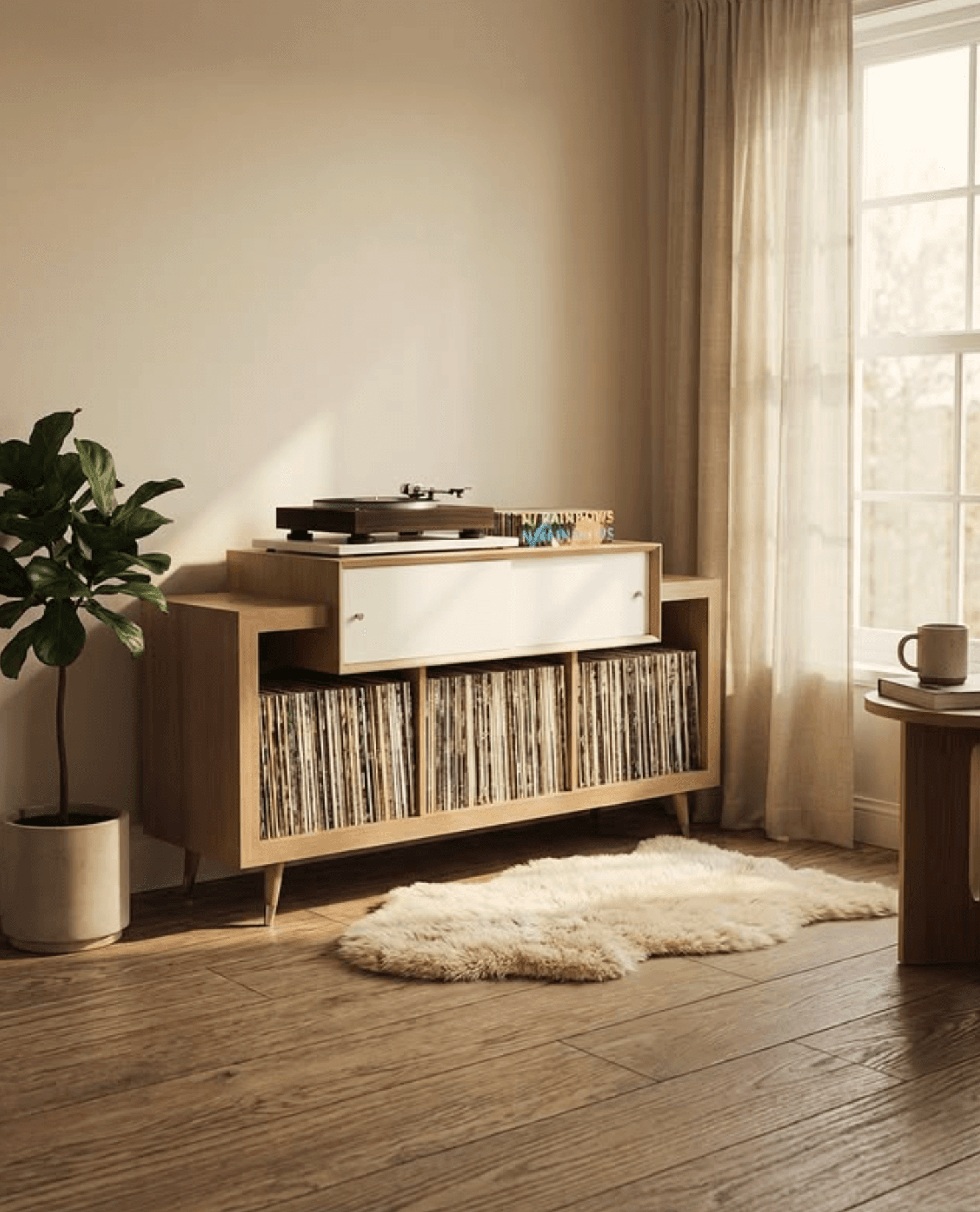
In e-commerce, customers often make expensive decisions without ever seeing the product in real life. This is especially challenging in luxury interior e-commerce, where products are high-value, often custom-made, and defined by materials, finishes, and details. Customers are not just buying a product - they are investing in a final look, feel, and overall experience.
Without clearly seeing and understanding the final result, uncertainty grows quickly. For configurable furniture, this becomes a real barrier - customers struggle to visualize materials and proportions, which leads to hesitation or delayed decisions.
At Hatimeria, we focused on one goal: making products easier to understand and faster to buy.
We partnered again with Tactile Audio Furniture, a luxury furniture brand we had previously worked with on designing and building their Shopify store - helping them increase sales by 55%. You can check out the case study here.
Their products combine premium materials with multiple configuration options and are sold entirely online. In this segment, product presentation is critical, and customers expect to clearly see and understand what they are buying before making a decision - especially when purchasing high-value, customizable pieces.
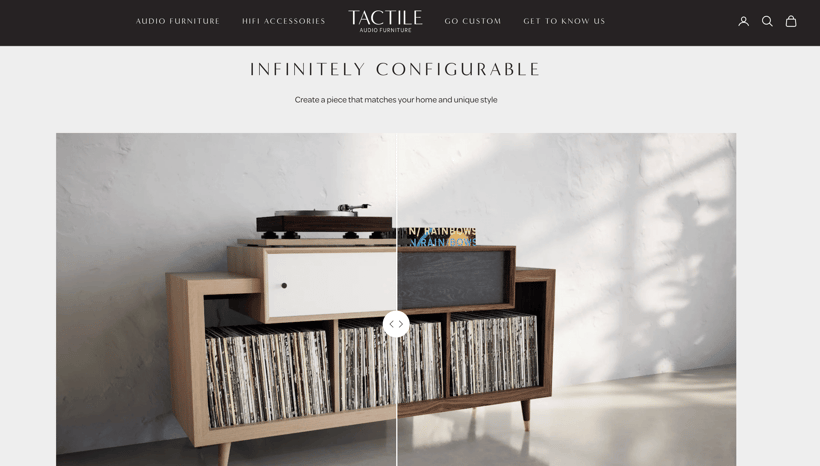
The main issue was simple: customers couldn’t clearly see what they were buying.
too many variants for static images
hard to compare premium materials
no clear view of the final product
higher hesitation before purchase
For luxury, high-value products, this directly impacts conversion and trust.
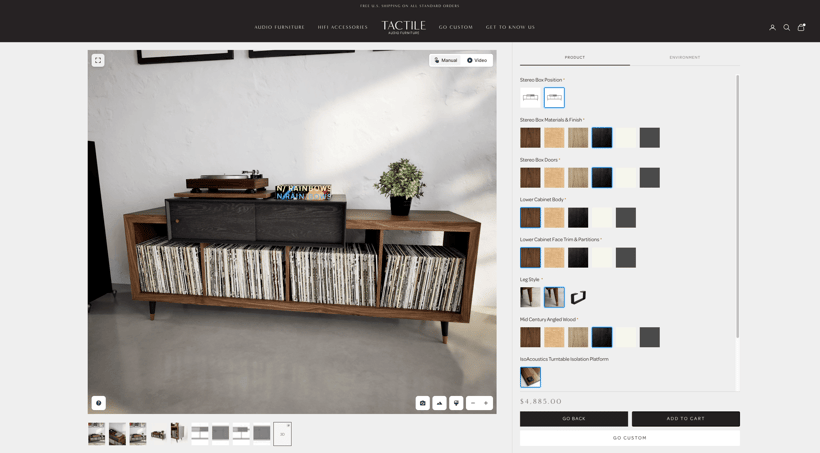
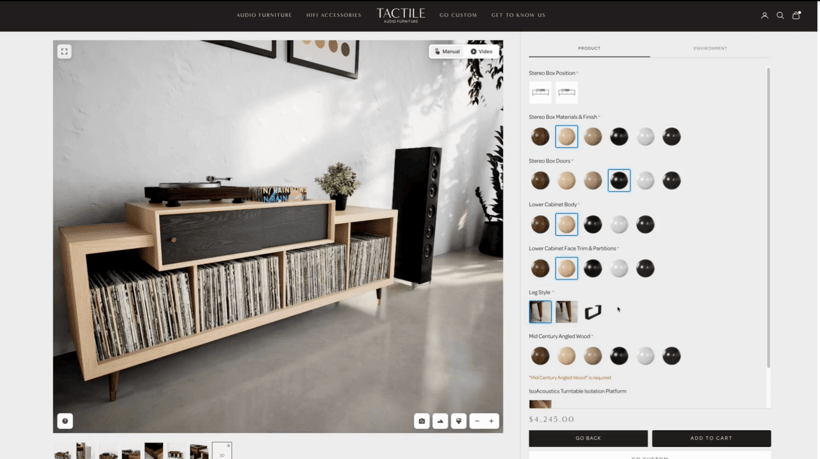
At Hatimeria, instead of adding more images, we introduced a 3D configurator directly on the product page.
For Tactile Audio Furniture, together with 3D Source, we created a 3D experience on Shopify where customers can:
rotate the product
change materials and finishes
see updates instantly
understand the final result
The key idea was to show the real product, not just an approximation. We kept Shopify’s core logic unchanged:
pricing stays in Shopify
checkout stays in Shopify
no risk to existing processes
We delivered a 3D product configurator and visualization layer connected to Shopify. It works as part of the product page and helps customers make decisions faster - especially important for premium, customizable products.
3D Models
built from CAD files and technical data
include materials, sizes, and components
reflect real product configurations
All configuration logic is managed in Metabox.
Shopify Integration
At Hatimeria, we connected products using metafields:
Metabox Product ID
Metabox Configurator ID
This keeps things simple:
no need to duplicate variants
easy to scale
clean Shopify setup
Frontend
the configurator is part of the product gallery
it loads the right model automatically
it matches selected options and shows images if needed
At Hatimeria, performance is part of every solution. 3D models can impact speed, so we load the configurator only when the user opens it. Until then, the product page works with standard images, which keeps it fast and responsive - especially on mobile devices. While the configurator is loading, users see a static preview, so the experience stays smooth and uninterrupted.
After adding the configurator customers:
can better understand the product
can choose options easier
product page reflects the final, premium product
From a business perspective:
fewer purchase doubts
faster decisions
higher confidence in high-value purchases
With support from Hatimeria, the product page changed from a static view into a tool that helps sell. Instead of guessing how the product will look, customers can interact with it in real time and make informed decisions.
Because the configurator is fully separated from Shopify’s core commerce logic, it integrates safely without affecting pricing, checkout or order processing - making it a scalable solution for growing e-commerce brands.
If you sell premium or customizable products, we can help improve your conversion. At Hatimeria, we build solutions that make products easier to understand and buy. Let’s turn your product pages into a sales tool.